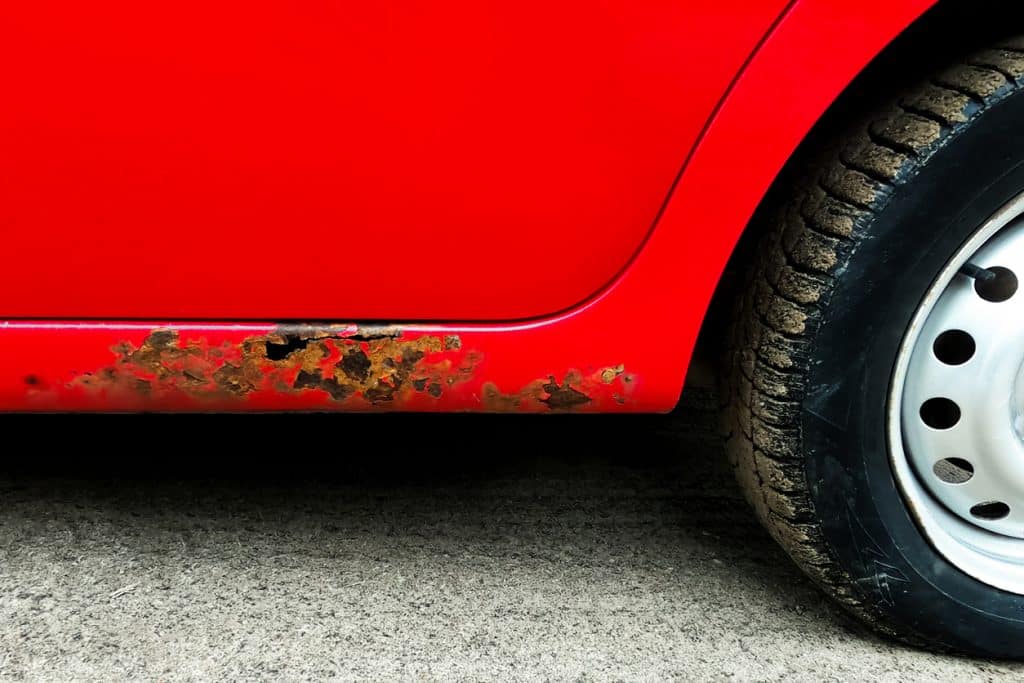
If you want to see the true cost of Calgary winters on vehicles, you need to look underneath. What happens to your vehicle’s undercarriage during our winter months is far more damaging than what happens to the painted surface, and it happens in ways that most drivers never directly witness until it’s too late. Understanding the mechanisms of undercarriage corrosion helps explain why rustproofing and undercoating aren’t optional in Calgary—they’re essential maintenance.
The fundamental problem is salt and moisture penetration. During winter, roads are treated with rock salt and chemical de-icing compounds. These accumulate not just on the road surface but on every part of your vehicle that sits below the belt line. Your undercarriage becomes essentially a salt bath. Snow and slush stick to the frame, belly pan, suspension components, brake lines, and wiring harnesses. The temperature cycling causes this salt-laden mixture to melt and refreeze repeatedly throughout the day. This wet, salty environment is exactly what ferrous metals corrode in.
Steel components rust through a straightforward electrochemical process. When salt water contacts bare steel, it completes an electrical circuit that accelerates oxidation. The iron in the steel combines with oxygen to form iron oxide (rust). This process accelerates dramatically in the presence of salt because salt ions carry electrical charge, dramatically speeding up the electrochemical reaction. A bare steel component in salt water can show significant rust staining within days. Within weeks, visible corrosion pitting begins. Within months, structural weakening occurs.
The suspension system is particularly vulnerable. Control arms, sway bar links, shock absorbers, and springs are all typically steel or aluminum. During winter, these components are continuously exposed to salt spray and salt-laden water from the road. The fasteners are especially vulnerable—brake bolts, suspension bushings, and mounting points corrode and seize. This affects vehicle performance. As fasteners corrode and components weaken, suspension alignment changes subtly. Brake lines can corrode through, leading to brake failure. Suspension components can fail completely if corrosion reduces their structural integrity.
Brake system corrosion is particularly serious. Brake lines carry hydraulic fluid, and they’re typically steel tubes with rubber sections. Salt exposure accelerates corrosion of the steel lines. Brake pads are exposed to salt spray directly. Brake rotors and calipers accumulate salt deposits. The corrosion causes brake fluid contamination, brake fade, and in extreme cases, brake failure. This is a genuine safety issue, not just an aesthetic concern.
Frame and subframe corrosion is insidious because it’s invisible. The underlying steel structure of your vehicle is what bears all the loads. Suspension mounts, engine mounts, and suspension attachment points are forged or stamped from steel. Salt penetration leads to corrosion of these critical joints. The corrosion spreads from the surface inward, gradually reducing the load-bearing capacity. You won’t notice this happening until a component fails catastrophically or rust-through creates actual holes in the frame.
The fuel tank and fuel lines are vulnerable too. Steel fuel tanks and fuel line connections corrode from the outside due to salt exposure. Aluminum fuel tanks corrode through different mechanisms but are equally susceptible. Fuel line failure can be catastrophic. Additionally, salt contamination of the fuel system can lead to corrosion of fuel injectors and other engine components, affecting engine performance.
Electrical harnesses and connectors suffer extensive damage from salt exposure. Salt causes oxidation of copper wires and corrosion of connector pins. Corrosion increases resistance in electrical circuits, leading to intermittent electrical failures that are notoriously difficult to diagnose. You might experience intermittent warning lights, gauge failures, or component failures that disappear and reappear without explanation. The root cause is often corrosion in electrical connectors exposed to salt water.
The cooling system is affected as well. Radiator and condenser fins corrode, reducing efficiency. Coolant hoses are attacked by salt spray. Corrosion of cooling system components can lead to coolant leaks, overheating, and engine damage. The water pump and thermostat housings can corrode, affecting their performance.
This is where the critical importance of undercoating and rustproofing becomes obvious. Protective coatings applied to the undercarriage create a physical barrier between the bare metal and the salt-laden environment. They seal cavities and hollow sections where salt accumulates. They protect fasteners and electrical components from direct salt exposure.
3M Professional Grade undercoating is specifically formulated for harsh climates like Calgary. It penetrates into cavities and tight spaces, hardens into a protective layer, and provides multi-year protection. The formulation balances flexibility—the undercoat needs to flex slightly as the vehicle frame naturally moves and settles—with durability and adhesion. Quality undercoating maintains flexibility even as it ages, preventing peeling and separation.
Woolwax rustproofing works through a different mechanism. Rather than a hard coating, Woolwax is a wax-oil emulsion that penetrates deeply into cavities and provides long-term protection. The wax component displaces moisture from surfaces, and the oil component provides lubrication and ongoing protection. As the vehicle heats and cools, the wax-oil mixture remains flexible and continues protecting for years. Many professional shops in harsh climates use Woolwax specifically for its superior cavity penetration and long-term flexibility.
The timing of undercoating application matters. Ideally, it should be applied before winter exposure begins—September or early October in Calgary. This ensures complete protection during the winter months when salt exposure is heaviest. Some shops offer undercoating touch-ups mid-winter if damage is discovered. Professional rustproofing treatments typically need reapplication every 1-2 years in harsh climates like Calgary, though this depends on the specific product and exposure.
The difference between a rustproofed vehicle and an unprotected one becomes starkly visible after 5-10 years. An untreated vehicle typically shows surface rust stains within 2-3 years, visible corrosion within 5 years, and potential structural corrosion by 7-10 years. A rustproofed and undercoated vehicle remains functionally corrosion-free for the same period. By 15 years, the difference is dramatic: an untreated vehicle might have failed brake lines, corroded suspension components, and frame integrity concerns. A protected vehicle remains mechanically sound.
The financial aspect is crucial. Replacing a corroded frame or suspension component is expensive—hundreds or thousands of dollars. Treating corrosion damage after it’s advanced requires extensive labor and parts replacement. Preventative undercoating at a few hundred dollars upfront is genuine value. It’s not an optional upgrade in Calgary—it’s legitimate preventative maintenance that extends your vehicle’s mechanical life significantly.
For vehicle owners across Calgary and Alberta, protecting your investment against the province’s harsh climate conditions is essential. Whether you’re in Airdrie, Cochrane, Okotoks, or Chestermere, our team at Calgary Paint Protection Film provides expert installation services backed by 3M certification.
Ready to Protect Your Vehicle?
Calgary Paint Protection Film is Calgary’s authorized 3M dealer. Get a free quote on professional installation.